Room logic
The table has to anchor the room without closing circulation.
The brief begins with seating count, walkway clearance, chair shape, sightline from the kitchen or entry, and how visually heavy the base can be before the room feels blocked.
A useful dining quote starts by proving the room can hold the table visually and physically.
A dining-table product study for residential and designer-led rooms where seat count, stone movement, edge comfort, delivery path, and production timing expectations need early agreement. This is a product study, not a completed Australian installation. It shows how April's Form turns a product direction into a serious project conversation.
Study logic
The study format keeps proportion, material, access, care, and commercial risk in the same conversation.
Room logic
The brief begins with seating count, walkway clearance, chair shape, sightline from the kitchen or entry, and how visually heavy the base can be before the room feels blocked.
Material logic
Beige travertine keeps the piece calm and architectural. Nero Marquina creates a stronger formal gesture. Taj Mahal Quartzite is the more resilient path when the household needs a clearer performance story.
Quote logic
Dimensions, stone shortlist, finish, edge profile, delivery city, access notes, and target approval date all belong in the first quote brief so the sales conversation is specific from the start.
Visual sequence
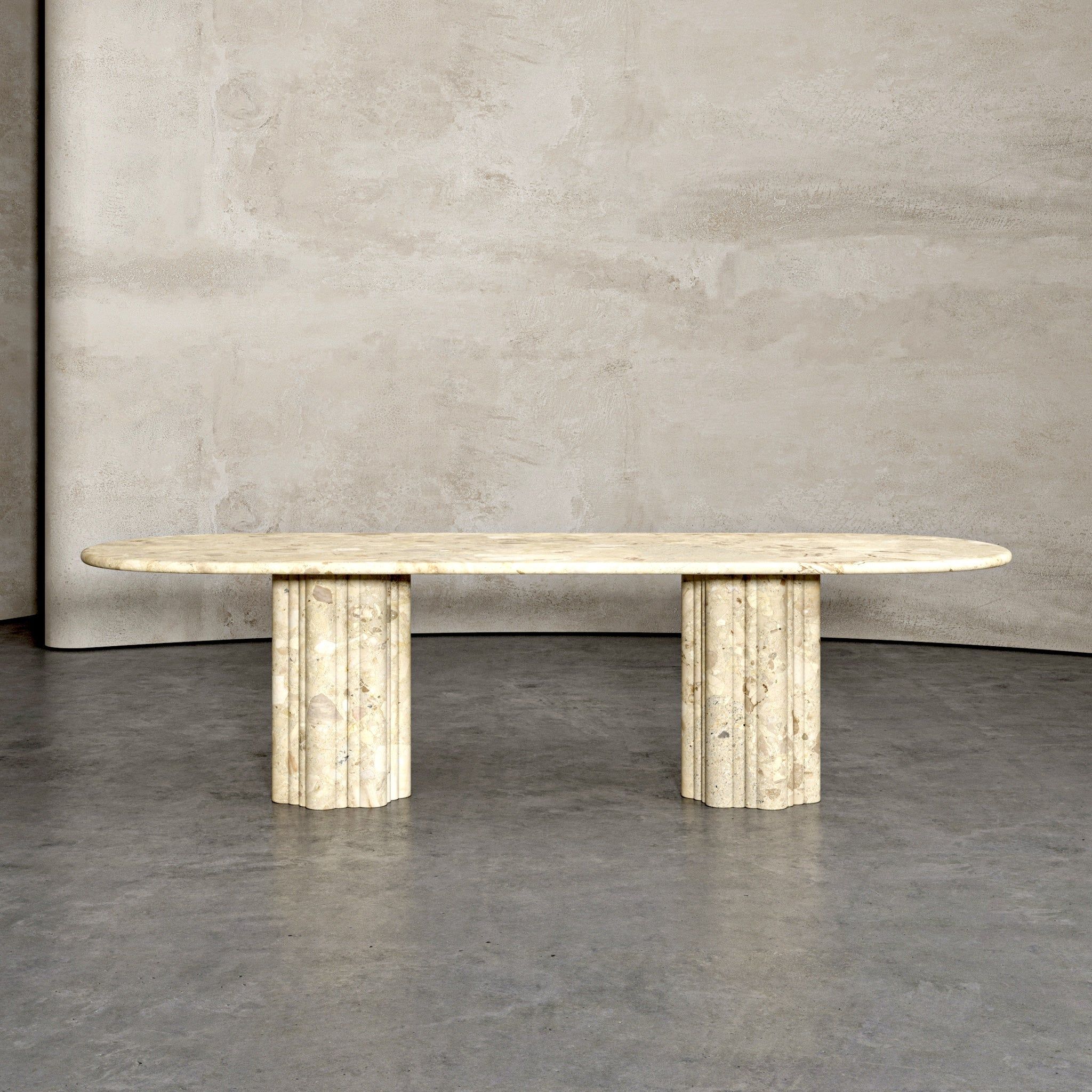
Use the full silhouette to judge room weight and chair clearance.

Material samples should be reviewed in the same light as the dining room.
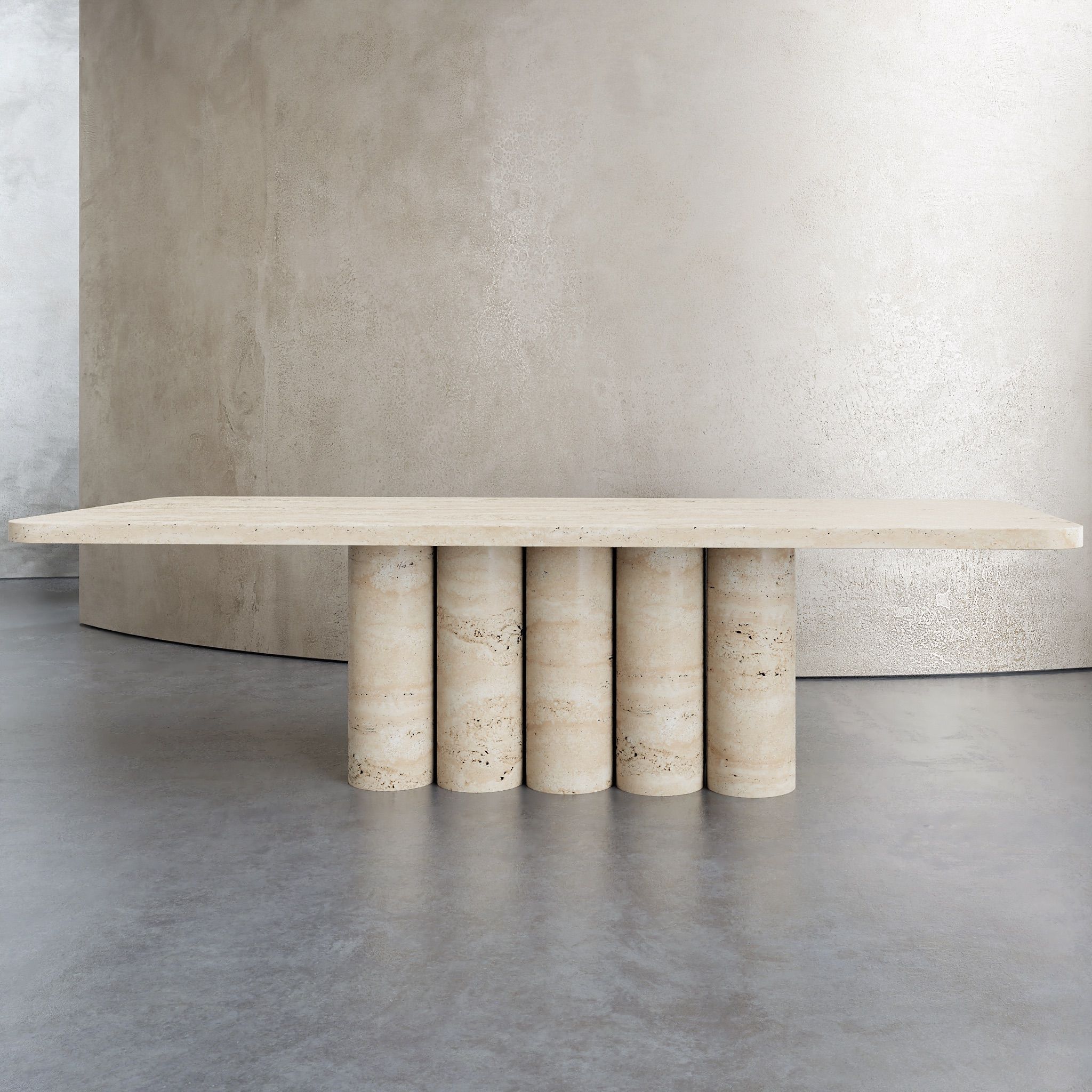
A heavier dining direction changes the quote risk and visual authority.
Specification decisions
It lets the client compare comfort, room pressure, and price before customisation expands.
Large horizontal surfaces make tone, pores, and veining more visible than a small inspiration image suggests.
A beautiful table becomes a poor project if lift size, stairs, or building rules are discovered too late.
Quote risk
The right project record shows what has to be checked before money, manufacturing, freight, and delivery are committed.
Constraint
The tabletop scale makes stone movement, base position, chair clearance, and lift or stair access visible risks.
Access note
Request lift dimensions, stair photos, doorway clearances, parking notes, and whether building management requires a booking window.
Delivery note
Delivery scope and placement support should be priced after the route is known, not treated as a flat add-on.
Care position
Travertine and marble are suitable only when the owner accepts patina, quick spill cleaning, and the right sealed finish.
Next step
Send the room, dimensions, stone direction, city, access notes, role, and timing so the next conversation starts from project context.